
About The Other
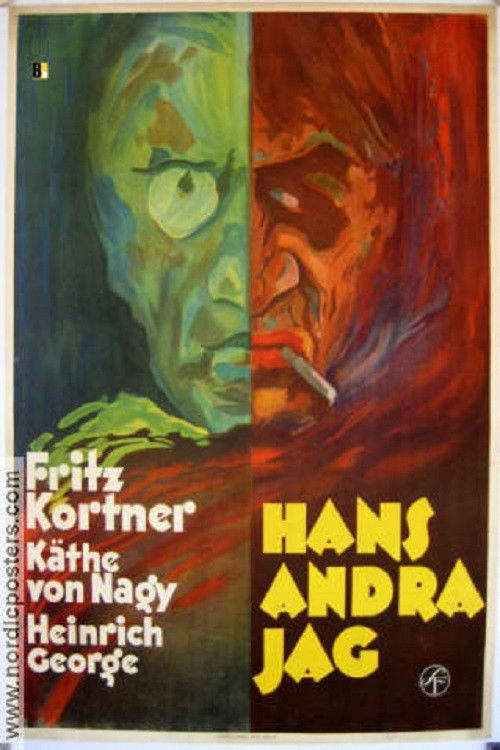
A psychological drama based on the popular Jekyll and Hyde theme involving a strict legal official. Based on the 1893 play "Der Andere" by Paul Lindau.
Few silent era artifacts capture the internal fracture of the human psyche with the same haunting precision as The Other, a 1930 German production that serves as a profound meditation on the duality of the soul. While modern audiences often associate the split personality trope with high-octane thrillers or superhero narratives, Robert Wiene approaches the material through a lens of somber legalism and moral paralysis. By focusing on a rigid arbiter of justice who finds his professional persona splintering under the weight of a secret, shadow existence, the film positions itself as a precursor to the psychological depth found in contemporary global cinema. It is a masterful study of repression, echoing the thematic weight that has long fascinated audiences in the Indian film industry, where the struggle between societal duty and private desire remains a cornerstone of powerful dramatic storytelling.
The film stands out not merely as a historical curiosity but as a testament to the influence of the expressionist movement on the evolution of crime dramas. Director Robert Wiene, whose work has long been studied for its manipulation of atmosphere and mood, manages to ground this high-concept premise in a sense of crushing inevitability. For viewers who appreciate the slow-burn intensity of classic neo-noir or the layered character studies often found in acclaimed Malayalam or Marathi cinema, this picture offers a compelling look at how early twentieth-century filmmakers utilized the screen to externalize the hidden corners of the human mind. The performances, particularly those that navigate the subtle shift between the protagonist's public rectitude and his darker impulses, carry a weight that transcends the limitations of its era.
This is a must-watch for cinephiles who seek to understand the roots of modern suspense and the cinematic obsession with the fractured identity. It is less concerned with the mechanics of a crime and more interested in the slow erosion of a man's conscience. Those who enjoy character-driven explorations where the antagonist is often an extension of the hero will find the narrative arc both familiar and unsettlingly fresh. By stripping away the spectacle and focusing on the claustrophobia of a life built on lies, the film remains a potent example of how European cinema of the early thirties laid the groundwork for the psychological thrillers that continue to dominate screens from Mumbai to Berlin today. It is a stark, sophisticated piece of storytelling that demands patience but rewards the viewer with a lingering sense of unease regarding the masks we all wear in the daylight.
Cast(12)