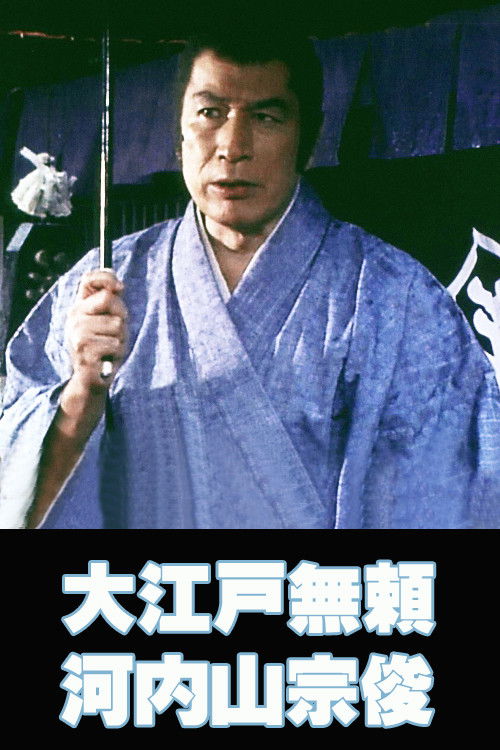
About The Villain from Edo Kochiyama Soshun
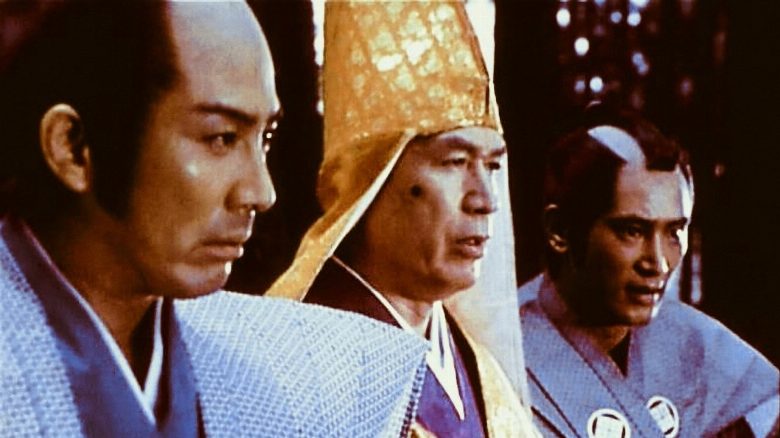
Kotiyama is a swindler and extortionist, the head of a whole gang of crooks, usually posing as a poor monk; once he really took vows, but he was kicked out of the monastery long ago. He is enterprising, smart and not too cruel, so his accomplices love him. Posing as an envoy from the abbot of the Kennei Temple, Kotiama plays a show in front of Lord Matsue with an income of 150,000 koku, and extorts money from him. The film is based on the famous play by Kawatake Mokuami.
Stepping back into the theatrical traditions of the Edo period, this 1982 adaptation captures the essence of classic Japanese storytelling with a sharp focus on the cunning antihero. The narrative centers on a charismatic swindler who uses his background as a defrocked monk to orchestrate elaborate ruses against the wealthy elite. Unlike the gritty, hyper-realistic dramas that often define global perceptions of Japanese cinema, this film feels distinctly rooted in the stylized flair of traditional kabuki theater. It highlights a recurring archetype in Asian cinema that mirrors the clever trickster figures often seen in Indian folklore and regional period pieces, where wit and social subversion take precedence over brute strength.
The film distinguishes itself by balancing high-stakes extortion with a sense of camaraderie among the protagonist and his band of misfits. By positioning the lead as a man who was once a legitimate member of the clergy but now operates entirely outside the moral law, the director creates a fascinating tension between his sophisticated intellect and his illicit profession. For audiences familiar with the grand historical epics of the Telugu or Tamil industries, where charismatic leads often challenge corrupt power structures, this story will feel surprisingly resonant despite its distant setting. Tetsuro Tamba brings a commanding presence to the role, anchoring the elaborate schemes in a performance that feels both theatrical and grounded.
This production is an ideal watch for students of film history and those who appreciate the intersection of stage drama and motion pictures. It serves as a visual bridge to the works of Kawatake Mokuami, translating the rhythmic dialogue and dramatic posturing of the original play into a cinematic language that remains accessible to modern viewers. The film avoids the trap of becoming a dry period piece, instead leaning into the tension of the cat and mouse game played between the extortionist and the powerful Lord Matsue. By focusing on the mechanics of the con rather than mere action sequences, the film invites the audience to admire the ingenuity of the antagonist. It is a testament to the enduring appeal of the clever rogue, a character type that continues to thrive in contemporary global cinema, proving that the art of the grift is a universal language that transcends both time and borders.