Thirst for Love(1966)
About Thirst for Love
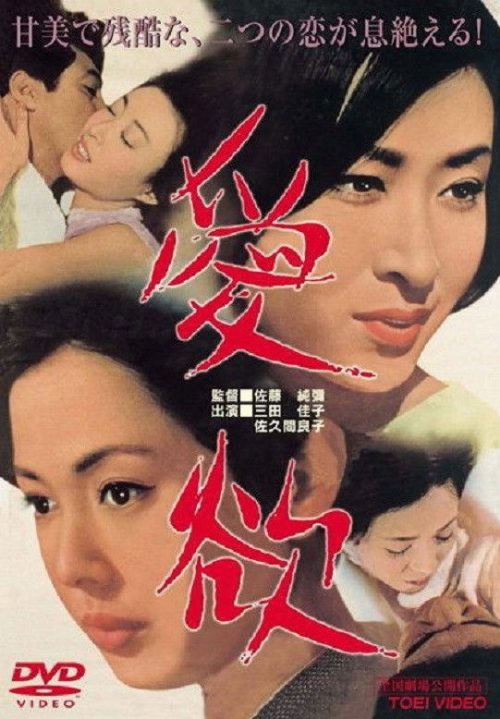
Natsuko, a Tokyo bar proprietress, and Yuki, a Kyoto Ryokan owner, vie for the affections of an advertising professional.
The 1966 Japanese drama Thirst for Love serves as a haunting exploration of human obsession and the fragile boundaries of social decorum in mid-century Japan. While contemporary Indian cinema often navigates complex romantic entanglements through grand musical spectacle or high-stakes melodrama, this film operates with a surgical, quiet intensity that feels strikingly modern even decades after its release. By focusing on the volatile triangular dynamic between two women of disparate backgrounds and a singular male professional, the narrative strips away the artifice of romance to expose the raw, often destructive hunger for validation and possession. It is a quintessential piece of sophisticated world cinema that demands patience from its audience, rewarding those who appreciate subtle performances over explosive plot twists.
The film distinguishes itself by juxtaposing the urban sophistication of Tokyo with the traditional, stoic atmosphere of Kyoto. This cultural friction provides a rich texture to the psychological tug-of-war unfolding on screen, illustrating how environment shapes the internal lives of its protagonists. For viewers who follow the evolution of global character studies, the film offers a masterclass in tension, where a lingering gaze or a carefully chosen word carries more weight than a thousand lines of dialogue. Those who enjoy the nuanced, slow-burn narratives found in the works of masters like Satyajit Ray or the introspective depth of recent Malayalam indie cinema will likely find the psychological stakes here both familiar and deeply compelling.
The ensemble cast, featuring the legendary Yoshiko Mita and Tetsuro Tamba, anchors the production with a grounded sense of reality that prevents the story from veering into pure melodrama. Their performances capture the desperation of characters who are trapped by their own desires, a theme that remains a cornerstone of powerful storytelling across all film industries. For cinephiles interested in the history of East Asian drama, this title represents a vital bridge between classic Japanese traditions and the emerging psychological realism of the sixties. It is not a film designed for casual viewing, but rather an experience intended for those who want to analyze the messy, unglamorous underpinnings of love and obsession. As a piece of historical cinema, it stands as a testament to the fact that the quest for connection is a universal pursuit, regardless of the cultural context in which it occurs.
Cast(12)