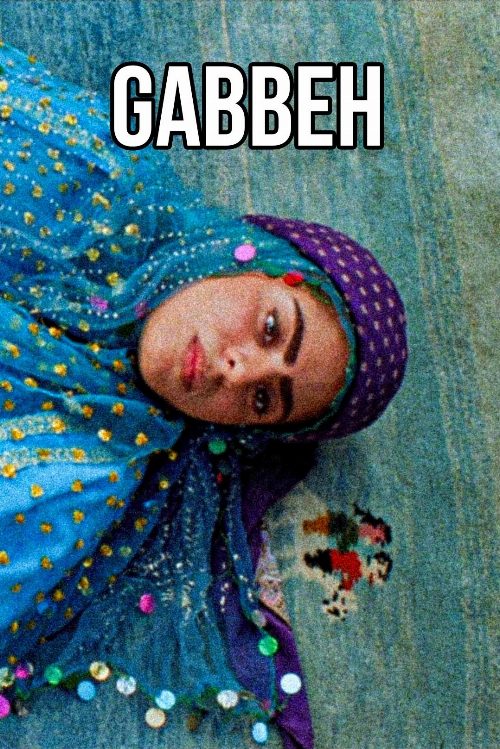
About Gabbeh
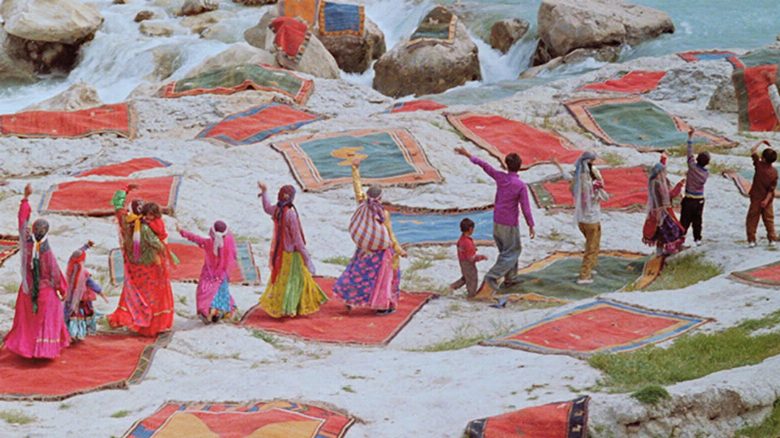
An elderly couple go about their routine of cleaning their gabbeh, while bickering gently with each other. Magically, a young woman appears, helping the two clean the rug. This young woman belongs to the clan whose history is depicted in the design of the gabbeh, and the rug recounts the story of the courtship of the young woman by a stranger from the clan.
Cinema often serves as a bridge between the tangible world and the realm of folklore, and Mohsen Makhmalbaf achieves this alchemy with striking visual poetry in the 1996 masterpiece Gabbeh. Rather than relying on traditional narrative structures, the film functions like a living tapestry, where the vibrant threads of nomadic life in Iran are woven into a surreal meditation on love and memory. The story begins with an elderly pair washing a traditional rug by a stream, only for a mysterious young woman to emerge from the fabric itself. This central conceit transforms the object into a vessel for history, allowing the audience to witness a courtship ritual that transcends the boundaries of time and realism. For viewers who appreciate the meditative pacing found in the works of masters like Satyajit Ray or the lyrical storytelling common in acclaimed Malayalam cinema, this film offers a similar depth of cultural immersion.
The film stands out for its bold use of color and landscape, which feel almost character-like in their intensity. While many contemporary dramas lean heavily on dialogue to drive their plots, this production prioritizes sensory experience, letting the vast, rugged terrains and the intricate patterns of the titular rugs tell the story of a clan defined by movement and ancient tradition. It is a work that demands patience, rewarding those who seek out cinema that functions as a piece of art rather than a standard entertainment product. Fans of global auteur cinema will find the director’s stylistic choices both brave and visually arresting, marking a high point in 1990s world cinema.
This experience is tailored for cinephiles who enjoy thematic explorations of heritage and the way stories are passed down through generations. By grounding the magical elements in the daily labor of the protagonists, the director manages to make the impossible feel intimately familiar. It is a film that sits comfortably alongside the best of international film festival selections, bridging the gap between the mundane realities of rural existence and the soaring heights of romantic longing. Whether you are a devotee of Iranian new wave cinema or simply looking for a film that challenges the conventional ways of seeing, this piece remains a vital, breathtaking entry in the history of global storytelling. Its ability to remain relevant decades after its debut speaks to the timeless nature of its central themes, proving that the language of visual storytelling is truly universal.