Small Swords Society(1961)
About Small Swords Society
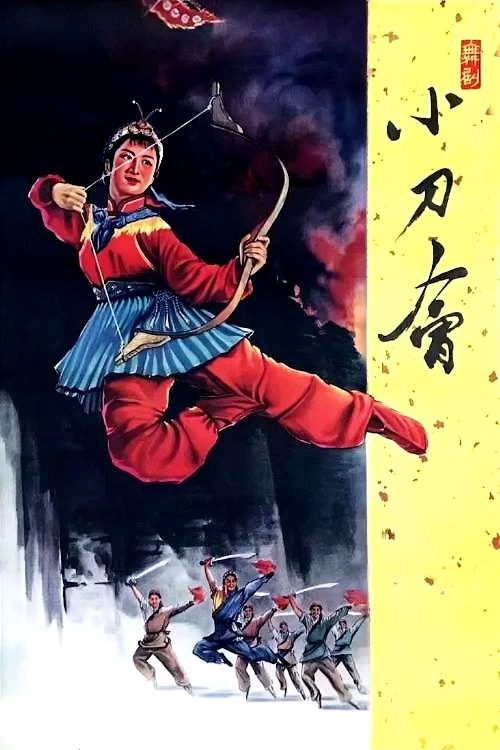
Based on the first dance drama in China to center itself on revolutionary themes, this famous piece of Chinese media history was adapted for the screen in 1961.
The 1961 adaptation of Small Swords Society serves as a fascinating time capsule of mid-twentieth century Chinese cinema, capturing a period when the intersection of political narrative and traditional performing arts reached a unique synthesis. Unlike contemporary action-oriented historical dramas that dominate the global box office today, this film leans heavily into its roots as a dance drama, prioritizing fluid movement and rhythmic storytelling over spoken dialogue. It stands out in the annals of history for being the first major cinematic project in China to weave revolutionary struggle into the structure of a choreographed performance, effectively transforming the screen into a stage. For viewers who appreciate how regional industries evolve their unique cultural languages, this film offers an essential look at how the Shanghai film scene experimented with blending classical aesthetics with the urgent ideological narratives of the era.
The film relies on the expressive lead performances of Shu Qiao, Chen Jianmin, and Ye Yinzhang, whose physical discipline carries the emotional weight of the story. By centering the struggle of the Small Swords Society through dance rather than prose, the production creates a heightened atmosphere that reflects the theatrical traditions popular during that decade. For modern audiences familiar with the stylized, high-stakes narratives of current Indian cinema, such as the grandeur found in Telugu or Tamil historical epics, this piece might feel like a distant ancestor. It shares that same desire to utilize grand spectacle to articulate themes of collective resilience and resistance against overwhelming odds. The production design and choreography are framed as a cohesive visual language, making it a compelling study for those interested in the history of musical theatre and the evolution of political storytelling on screen.
Audiences who enjoy slow-burn historical dramas or those curious about the roots of East Asian cinematic art forms will find this a rewarding watch. It is not merely a record of a performance but an early example of how directors sought to adapt live stage energy for the camera lens. While it is undeniably a product of its specific historical moment, the film remains significant for its ambition and the technical skill required to capture such complex choreography on film. For fans of global cinema who appreciate the bridge between stage and screen, this classic offers a profound window into a formative era of filmmaking that prioritized artistic fusion over simple narrative tropes.