About Dodes'ka-den
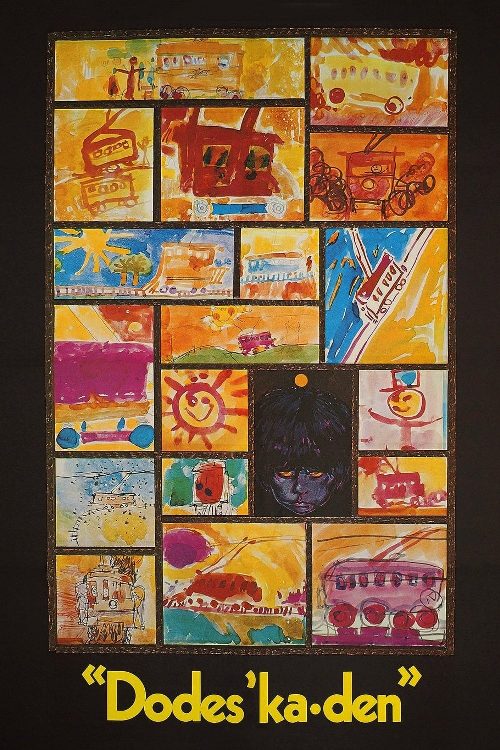
On a Tokyo dump’s shantytown edge, interwoven vignettes follow residents scraping by: a boy who “drives” an imaginary trolley, a homeless father and son designing a dream house, a young woman brutalized at home, drunks, schemers, and saints of small kindnesses. Kurosawa crafts a ragged mosaic of hardship, fantasy, and flickers of grace that keep people moving forward.
Akira Kurosawa took a bold departure from his signature samurai epics and tense crime thrillers when he stepped into the vibrant, color-drenched world of Dodeska-den. Set against the backdrop of a sprawling shantytown built upon a refuse heap, the film acts as a kaleidoscopic study of poverty and the human spirit that remains remarkably relevant to contemporary viewers. In an era where Indian regional cinema is increasingly celebrated for its gritty realism and social commentary, this Japanese masterpiece feels like a spiritual ancestor to the poignant slum-based narratives seen in modern Tamil or Malayalam dramas. Kurosawa moves away from the grand scale of his historical works to embrace the intimate, often tragic, lives of society’s most marginalized figures, finding a profound beauty in their struggle to define reality amidst squalor.
The brilliance of the film lies in its refusal to offer a singular, traditional narrative arc. Instead, it presents a collection of interconnected sketches that oscillate between crushing despair and whimsical invention. We are introduced to a young man who finds solace in the rhythmic pantomime of operating a spectral streetcar, a task that frames his entire existence. This imaginative leap serves as a vital survival mechanism for the characters, who use fantasy as a shield against the harshness of their surroundings. For audiences who appreciate the nuanced character studies found in the works of directors like Satyajit Ray or the raw, unvarnished portrayals of social displacement in today’s parallel cinema, this film offers a masterclass in visual storytelling. The vivid use of color, a first for the director, emphasizes the contrast between the bleak environment and the inner lives of those who inhabit it.
Those with a penchant for philosophical dramas that examine the quiet dignity of the downtrodden will find this work deeply rewarding. It does not demand a hero’s journey; rather, it invites the audience to witness the intricate dance of human resilience. By focusing on the small, daily triumphs of people who have been discarded by the urban machine, the film challenges us to reconsider how we measure value in a society obsessed with progress. Whether it is the father and son dreaming of an architectural paradise or the various drifters passing through the settlement, the cast delivers performances that feel lived-in and authentic. This is essential viewing for anyone interested in the evolution of world cinema and the way legendary filmmakers have historically used the lens to highlight the voices of the forgotten.
Cast(47)