
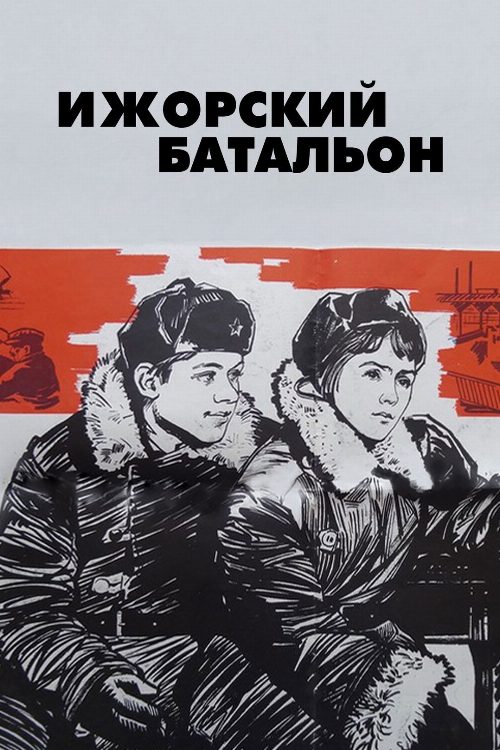
About Izhora Battalion
The film is about the fate of the soldiers of the Izhora battalion. Formed from the factory’s workers, the battalion took part in decisive battles against the regular units of the Nazi army and ended its heroic journey on the coast of the Baltic Sea.
Cinematic depictions of the Great Patriotic War often lean into grand strategic maneuvers, yet Izhora Battalion finds its strength by grounding the conflict within the soot and steel of the industrial front. Released in 1972, this Soviet-era production shifts the focus away from professional military cadres to highlight the transformation of ordinary factory laborers into a cohesive defensive force. By emphasizing the civilian origins of these soldiers, the film taps into a poignant narrative of necessity, illustrating how the machinery of war fundamentally reshaped the lives of workers who were forced to trade their tools for rifles. It captures a specific historical ethos, where the survival of the collective identity became synonymous with the defense of the homeland.
For viewers interested in the evolution of Russian war cinema, this film serves as a compelling bridge between early post-war propaganda and the more nuanced, character-driven dramas that would emerge in later decades. While contemporary audiences might be accustomed to the high-octane spectacle of modern global blockbusters, Izhora Battalion offers a deliberate, atmospheric pace that prioritizes the internal moral weight carried by its protagonists. The performances from Sergei Plotnikov and Leonid Nevedomsky provide a human anchor to the strategic engagements, portraying soldiers who remain haunted by their previous lives as factory hands even as they face the brutal realities of the Baltic front. This focus on the psychological transition from civilian to combatant makes the film a compelling study for those who appreciate historical realism over stylized action.
The production stands as a testament to the Soviet film industrys ability to weave local industrial history into the broader tapestry of national myth-making. Much like how modern Indian regional cinema often mines local folklore or specific community struggles to anchor its storytelling, this film utilizes the legacy of a specific worker battalion to symbolize the endurance of an entire region. It is an essential watch for cinephiles who seek to understand the stylistic conventions of Eastern European historical dramas from the seventies. By charting the journey of these men from the factory floor to the coastal battlefields, the film succeeds in framing the war not merely as a clash of armies, but as a defining ordeal that tested the resilience of the laboring class. It remains a somber, reflective piece that invites viewers to contemplate the heavy human cost hidden behind the formal annals of military history.